World Occupational Therapy Day on 2020/27/10 - “Neurofeedback makes my work even more exciting”
In a growing number of occupational therapy practices, Neurofeedback is already established as a solid treatment method. However, many occupational therapists also doubt whether the “technical” neurofeedback fits into their everyday work. Being said, occupational therapists can even get some reimbursement from the health insurance and healthcare system for neurofeedback therapy in countries like Germany. In an interview, lecturer Thomas Theis reports what inspires him about neurofeedback, how neurofeedback can be integrated into occupational therapy and why occupational therapists in particular bring the perfect conditions for neurofeedback.
Thomas, why did you become an occupational therapist?
I have come through personal experiences for occupational therapy. Being younger, I suffered a complex injury to my arm – a disaster for me as a musician. I've been in treatment for a long time and have tried many therapies and found that occupational therapy really helped me. In occupational therapy, I was forced to use my arm again – not like in physiotherapy for stretching or exercises – but for real things - like darts, weaving or shuffle cards, that I enjoyed as a young person. I experienced a mind-changing moment: I realised that my condition will not improve if I do not use my hand and this knowledge has awakened my passion for occupational therapy.
What do you love about your profession?
There’s this saying, you also often find on coffee mugs “I‘ve become an occupational therapist because being a superhero isn’t a real job.”
For me, there is nothing missing in this profession. Occupational therapy is characterised by versatility, complexity and individuality. As an occupational therapist, I have to look at my patients with a mindful eye, I need to find out where problems exist and work together with them towards a solution or compensation of their problems. Not only are the patients making progress, but also one as an occupational therapist grows and develops at all levels. Occupational therapist is a meaningful and helpful profession that is incredibly fun. In addition, entrepreneurial independence has always been my big goal – managing my two practices to me is the fulfilment of this goal.
What are your biggest challenges at work?
At the moment, the relocation of my practices is the biggest logistical challenge, and the pandemic has, of course, also confronted us with problems, which we are managing through together. With a large team in practice, it never gets boring, we also have a long patient’s waiting list. Therapy continues and patients must be given full attention. The treatment of individual patients can also be challenging as for example I am currently combining neurofeedback and solution-oriented conversations in the treatment of a severely traumatised patient.
How can neurofeedback be integrated into occupational therapy?
Neurofeedback can be used in occupational therapy as a method of choice to achieve the medically prescribed therapeutic goal. A combination of neurofeedback with other therapeutic methods is also possible in order to help patients to sustainably improve their everyday competence. One has to remember, of course, that the individual neurofeedback procedures differ from each other. In my view, methods such as Infra Low Frequency (ILF) neurofeedback, which help to improve self-regulation, are particularly well suited. And I say this, knowing them very well. They help to sustainably improve everyday behavior and competences and, as a resource-related approach, are particularly suitable for occupational therapy. I now use neurofeedback for many indications. Also patients are very interested in the method.
Do occupational therapists bring the right conditions for neurofeedback training?
Thomas: From my point of view, occupational therapists bring the perfect conditions for neurofeedback. Especially in symptom-based ILF neurofeedback, clinical observation of the patient’s state and behavior is very important. You have to pay particular attention to body physiology, breathing and mimic in order to detect signs of for example tension and relaxation,to adapt the treatment protocol accordingly. Occupational therapists are usually very trained in clinical observation and therefore a very important professional group in neurofeedback.
What would you advise occupational therapists that consider working with neurofeedback?
My advice for occupational therapists who want to offer neurofeedback is: Pay attention to a good and well-founded training, start slowly and try it out before you start treating complex cases . Take advantage of further education and training like advanced courses - as well as supervision with experienced colleagues.
Neurofeedback is an instrument that can make your everyday work in practice even more exciting. Colleagues, who have been initially concerned about technical devices in therapy, also like to work with neurofeedback now. It also keeps the therapist mentally fit and awake because you constantly keep an analytical view of the patient and have to register small physiological changes quickly. Working with neurofeedback is a lot of fun for me and I also know many colleagues who are excited by neurofeedback and offer it as a solid treatment along the other existing therapy methods in occupational therapy.
Learn more about Thomas Theis from his lecturer profile on EEGInfo
The interviewer was Jennifer Riederle, Psychologist at BEE Medic
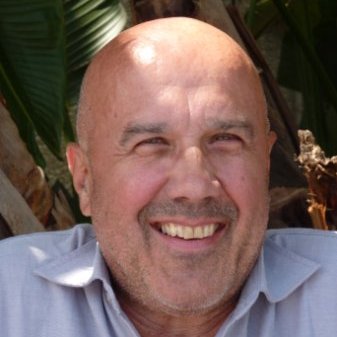
Daniel Wagner
Profile
Daniel Wagner has been a Neurofeedback Practitioner and Trainer for almost 15 years. He has contributed to the development of neurofeedback in France.
He has trained many people in France and abroad. He is also an international lecturer. In the 2000s he created IFRIE, the French Institute for Research in Emotional Intelligence, before devoting himself entirely to the practice, research and teaching of neurofeedback. He is working on the translation of the Othmer Method into French.
My next courses
Experience with neurofeedback
- works with Neurofeedback since 2006
Course portfolio
- Basic Trainings
Languages
- French
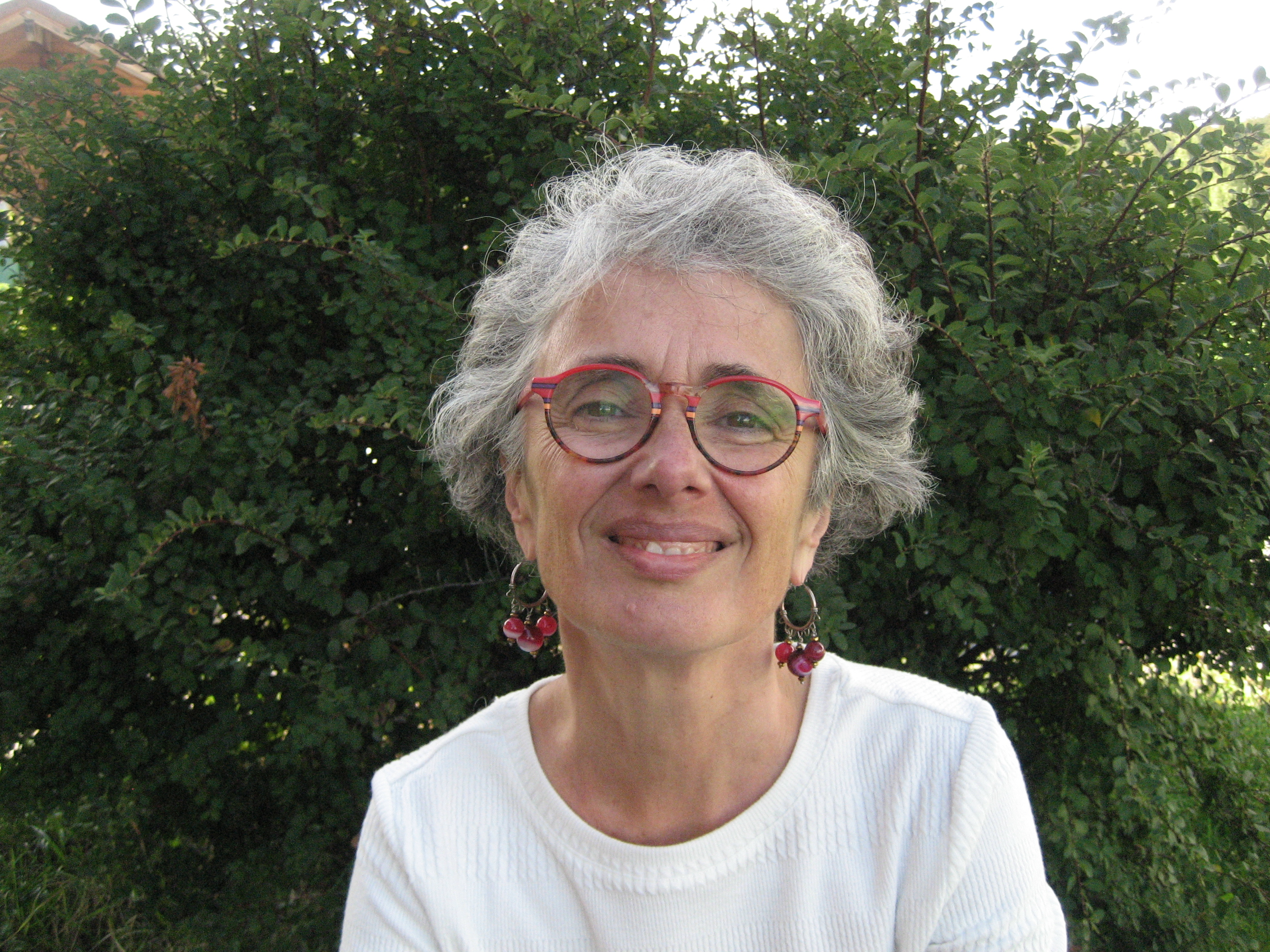
Pascale Moyses-Wagner
Profile
Pascale Moyses-Wagner is a Neurofeedback Practitioner and Trainer. She is the Pedagogical Director of the Neuroptimum Institute in France and animates its network of Practitioners by proposing a permanent and regular training. Her advice in supervision is much sought after by people in the field.
My next courses
Course portfolio
- Basic Trainings
Languages
- French
Patient information about Neurofeedback for your practice marketing — what matters
In considering the flood of information about health services via the Internet, Apps and brochures, it is more important than ever to provide patients with specific and well-founded information. Patients' need for information is particularly high for Neurofeedback. After all, ‘What exactly happens if electrodes are attached to my or my child's head?’ is a more than justified question. However, reliable, comprehensible information is hard to find and serious medical offers are difficult to distinguish from those that are not. The patient flyers of BEE Medic offer a very good opportunity to explain Neurofeedback to your clients in a professional and understandable way.
Practical marketing — support for individual communication with patients
Practice marketing is not at all an easy task for many health professionals and therapeutic working groups. Always in a tense relationship between the economic necessity to market modern health services on the one hand and the regulations of advertising and competition law and the adherence to professional guidelines - which have to be considered - on the other hand. After all, health is our highest good and it is not appropriate to deal with promises of salvation lightly.
Certainly no easy terrain. The among PR and marketing professionals in Germany much quoted marketing principle "Do good and talk about it", which goes back to a booktitle from 1961, is not so easy for practices to realize.
At this point, however, it should also be said that individual and active communication with the patient is the top priority for practices. No marketing tool in the world can replace empathy, your professional skills and direct communication with patients.
Neurofeedback is also a therapy method that is difficult to understand for a large proportion of patients. ‘What happens exactly with me?’, ‘Why do we need electrodes at the head?’, ‘Does it hurt?’ (here, for the sake of completeness: No, it does not) are typical questions. And especially in the field of mental health and working with young patients, personal communication is your most important means of building trust.
We are happy to support you with professional, targeted information. Patient flyers are a particularly simple and at the same time very efficient way of informing patients about your Neurofeedback services and giving them an initial orientation.
But how do you recognize good patient information?
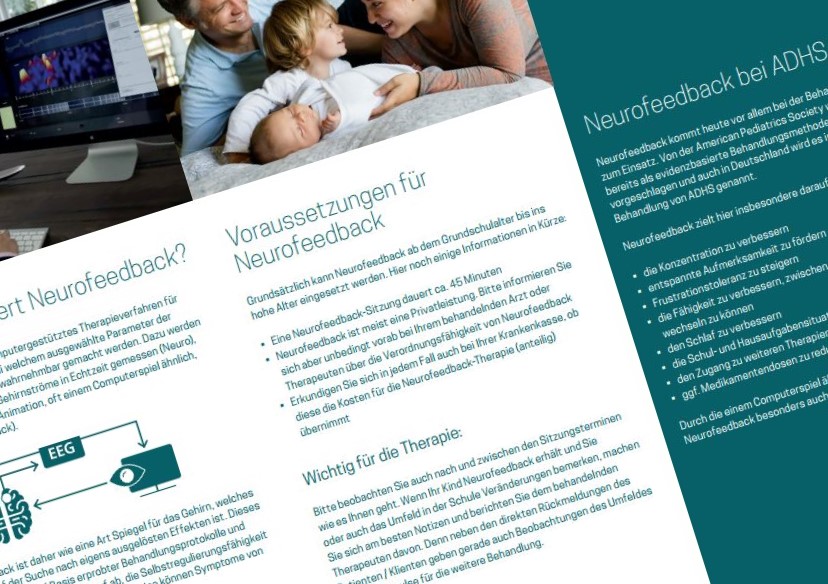
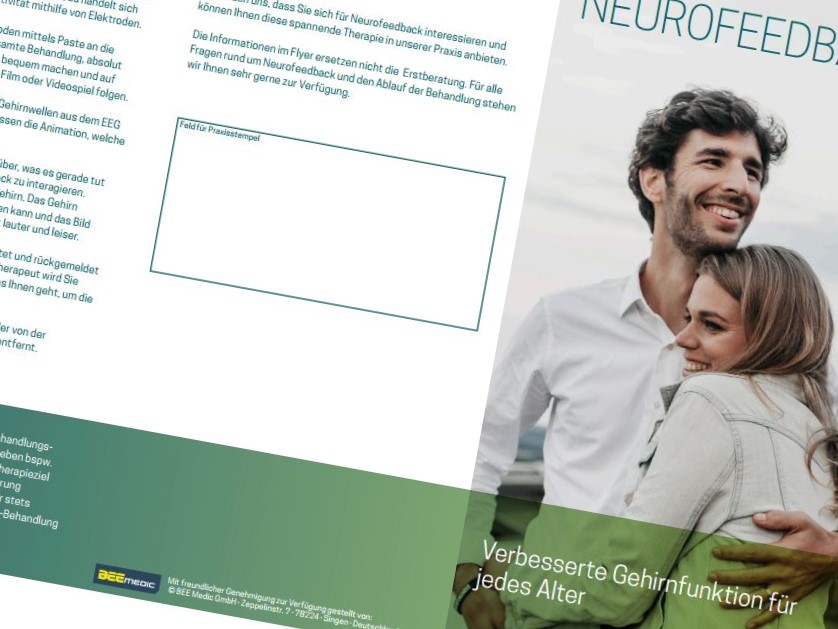
Patient information - what is important
In short: Good information to patients focuses on patients and their questions rather than on a specific device, manufacturer or brand. You — not patients — need the therapeutic know-how, the advantages and details of a particular process or Neurofeedback system and the knowledge to integrate it in the therapeutic process.
Therefore, the information we provide to patients does not focus on any of our brands or products. Rather, we look at the following aspects:
- How does the neurofeedback session work?
- How does neurofeedback actually work?
- Are there any requirements for neurofeedback therapy?
- What do I have to consider during the therapy?
This information is complemented by references to important indications and specific therapeutic objectives.
You receive meaningful materials that support you in active patient communication and convey relevant knowledge to your clients in a short and understandable way.
Neurofeedback explained in an accessible way - here you can obtain up-to-date patient information
Customers of BEE Medic GmbH can order the Neurofeedback patient information directly via the webshop. The following patient information is currently available in the form of flyers in German and English:
- Neurofeedback — improved brain function for all ages
- Neurofeedback in ADHS — Information for ADHS patients and their families
A field for your practical stamp allows you to individualise the flyers. We would also be happy to provide you with a digital copy. Please contact the customer services of BEE Medic GmbH at office@beemedic.de or office@beemedic.ch.
Neurofeedback Grundkurs
Course description
Der Neurofeedback Grundkurs ist der ideale Einstieg ins Neurofeedback. In 5 Tagen lernen Sie alles, was Sie für den Start benötigen – vom Anlegen der Elektroden, über das Bedienen der Hard- und Software bis hin zur Auswahl der richtigen Behandlungsprotokolle, der Erstellung von Symptomprofilen und der Bewertung von Behandlungsergebnissen.
Einen zentralen Teil nimmt das tägliche Neurofeedback-Praktikum ein, bei dem Sie abwechselnd als „Therapeut/Therapeutin“ und „Patient/Patientin“ Neurofeedback selbst erfahren. Das Vorgehen und die Interpretation der Trainingsergebnisse werden für jeden einzelnen Teilnehmenden in Kleingruppen unter Leitung erfahrener Lehrpersonen diskutiert. So sind Sie nach Abschluss des Kurses in der Lage, sehr effizientes Neurofeedback direkt in der klinischen Praxis anzuwenden.
Das vollständige Neurofeedback Equipment stellen wir Ihnen während des Kurses zur Verfügung. Am Ende des Kurses findet ein Abschlusstest statt und Sie erhalten ein Zertifikat.
Einen Einblick in unsere Grundkurse erhalten Sie hier.
Essential teaching content
- Technische Grundlagen des EEG und der Signalverarbeitung
- 10-20 System und Elektrodenplatzierungen
- Selbstregulierungsmodell und Neuroplastizität
- Neurophysiologische Grundlagen zum Verständnis von Neurofeedback-Effekten
- Umgang mit Neurofeedback-Hardware und Software sowie Artefakte erkennen
- Muster von Fehlregulierungen im Zusammenhang mit physischen, emotionalen und Verhaltensproblemen erkennen
- Neurofeedback-Protokolle für klinische und Peak Performance Anwendungen
- Symptombewertung und Beurteilung von Trainingsverläufen
- Neurofeedback und Medikamente
- Kontraindikationen
- Verlaufskontrolle und CPT – Continuous Performance Test
- Neurofeedback-Praktikum, zur Selbsterfahrung wie schnell und spezifisch Neurofeedback-Effekte sein können
After the course you can
- Sicher mit 2-Kanal ILF-Neurofeedback arbeiten und Ihre Patientinnen und Patienten nachhaltig mit Neurofeedback unterstützen
- Behandlungsprotokolle gezielt nach Anlass und zu behandelnder Person auswählen und einsetzen
- Patientinnen und Patienten zu einer besseren Selbstregulierung verhelfen und Symptome von psychischen Erkrankungen lindern, wovon meist auch weitere therapeutische Interventionen profitieren
- Selbst von der angenehmen Arbeit mit Neurofeedback profitieren, durch eine gewisse „Leichtigkeit“, die Neurofeedback in den therapeutischen Arbeitsalltag bringt
Course highlights
- Praktische Selbsterfahrung und hoher Praktikumsanteil
- Intensive Betreuung durch erfahrene Dozierende in Kleingruppen
- Bereitstellung des vollständigen Neurofeedback-Equipments und Verbrauchsmaterialien
Location
Hannover - DIAKOVERE AkademieAnna-von-Borries-Straße 1-7
30625 Hannover
Germany
Period of time
30.11.2026 – 04.12.2026
30.11.2026 08:30 – 18:00
01.12.2026 08:30 – 18:00
02.12.2026 08:30 – 18:00
03.12.2026 08:30 – 18:00
04.12.2026 08:30 – 16:00
Local time: Europe/Berlin
Your selected time zone
Price
1.490,00 EURIncluded in the price
- Bereitstellung des Neurofeedback-Equipments und von Verbrauchsmaterialien
- Umfassende Kursunterlagen
- Abschlussprüfung mit Zertifikat bei bestandener Prüfung
More Information
Der Kurs richtet sich exklusiv an heilberufliche und therapeutische Fachanwenderinnen und -anwender.
Gut zu wissen:
Zur Buchung werden Sie direkt auf die Webseite der Diakovere Hannover weitergeleitet.
Language
- German
Lecturer
Organizer
Diakovere GmbH Akademie
Anna-von-Borries-Straße 1-7
30625 Hannover
Deutschland
- akademie@diakovere.de
- Phone: Telefon 0511 5354-662
register*
Print course description
*By clicking on "register" you will be forwarded directly to the organizer of the course for booking. The organizer is also responsible for course organisation and invoicing.
Neurofeedback Grundkurs
Course description
Der Neurofeedback Grundkurs ist der ideale Einstieg ins Neurofeedback. In 5 Tagen lernen Sie alles, was Sie für den Start benötigen – vom Anlegen der Elektroden, über das Bedienen der Hard- und Software bis hin zur Auswahl der richtigen Behandlungsprotokolle, der Erstellung von Symptomprofilen und der Bewertung von Behandlungsergebnissen.
Einen zentralen Teil nimmt das tägliche Neurofeedback-Praktikum ein, bei dem Sie abwechselnd als „Therapeut/Therapeutin“ und „Patient/Patientin“ Neurofeedback selbst erfahren. Das Vorgehen und die Interpretation der Trainingsergebnisse werden für jeden einzelnen Teilnehmenden in Kleingruppen unter Leitung erfahrener Lehrpersonen diskutiert. So sind Sie nach Abschluss des Kurses in der Lage, sehr effizientes Neurofeedback direkt in der klinischen Praxis anzuwenden.
Das vollständige Neurofeedback Equipment stellen wir Ihnen während des Kurses zur Verfügung. Am Ende des Kurses findet ein Abschlusstest statt und Sie erhalten ein Zertifikat.
Einen Einblick in unsere Grundkurse erhalten Sie hier.
Essential teaching content
- Technische Grundlagen des EEG und der Signalverarbeitung
- 10-20 System und Elektrodenplatzierungen
- Selbstregulierungsmodell und Neuroplastizität
- Neurophysiologische Grundlagen zum Verständnis von Neurofeedback-Effekten
- Umgang mit Neurofeedback-Hardware und Software sowie Artefakte erkennen
- Muster von Fehlregulierungen im Zusammenhang mit physischen, emotionalen und Verhaltensproblemen erkennen
- Neurofeedback-Protokolle für klinische und Peak Performance Anwendungen
- Symptombewertung und Beurteilung von Trainingsverläufen
- Neurofeedback und Medikamente
- Kontraindikationen
- Verlaufskontrolle und CPT – Continuous Performance Test
- Neurofeedback-Praktikum, zur Selbsterfahrung wie schnell und spezifisch Neurofeedback-Effekte sein können
After the course you can
- Sicher mit 2-Kanal ILF-Neurofeedback arbeiten und Ihre Patientinnen und Patienten nachhaltig mit Neurofeedback unterstützen
- Behandlungsprotokolle gezielt nach Anlass und zu behandelnder Person auswählen und einsetzen
- Patientinnen und Patienten zu einer besseren Selbstregulierung verhelfen und Symptome von psychischen Erkrankungen lindern, wovon meist auch weitere therapeutische Interventionen profitieren
- Selbst von der angenehmen Arbeit mit Neurofeedback profitieren, durch eine gewisse „Leichtigkeit“, die Neurofeedback in den therapeutischen Arbeitsalltag bringt
Location
Dornstadt - Diakonisches Institut für soziale BerufeBodelschwinghweg 30
89160 Dornstadt
Germany
Period of time
13.07.2026 – 17.07.2026
13.07.2026 08:30 – 18:00
14.07.2026 08:30 – 18:00
15.07.2026 08:30 – 18:00
16.07.2026 08:30 – 18:00
17.07.2026 08:30 – 16:00
Local time: Europe/Berlin
Your selected time zone
Price
1.190,00 EURIncluded in the price
- Bereitstellung des Neurofeedback-Equipments und von Verbrauchsmaterialien
- Umfassende Kursunterlagen
- Abschlussprüfung mit Zertifikat bei bestandener Prüfung
More Information
Der Kurs richtet sich exklusiv an heilberufliche und therapeutische Fachanwenderinnen und -anwender.
Gut zu wissen: Zur Buchung werden Sie direkt auf die Webseite des Diakonischen Instituts Dornstadt weitergeleitet.
Language
- German
Lecturer
Organizer
Diakonisches Institut für soziale Berufe
Bodelschwinghweg 30
89160 Dornstadt
Deutschland
- info@diakonisches-institut.de
- Phone: +49 7348 9874-0
- Fax: +49 7348 9874-30
register*
Print course description
*By clicking on "register" you will be forwarded directly to the organizer of the course for booking. The organizer is also responsible for course organisation and invoicing.
Neurofeedback Grundkurs
Course description
Der Neurofeedback Grundkurs ist der ideale Einstieg ins Neurofeedback. In 5 Tagen lernen Sie alles, was Sie für den Start benötigen – vom Anlegen der Elektroden, über das Bedienen der Hard- und Software bis hin zur Auswahl der richtigen Behandlungsprotokolle, der Erstellung von Symptomprofilen und der Bewertung von Behandlungsergebnissen.
Einen zentralen Teil nimmt das tägliche Neurofeedback-Praktikum ein, bei dem Sie abwechselnd als „Therapeut“ und „Patient“ Neurofeedback selbst erfahren. Das Vorgehen und die Interpretation der Trainingsergebnisse werden für jeden einzelnen Teilnehmer in Kleingruppen unter Leitung erfahrener Dozenten diskutiert. So sind Sie nach Abschluss des Kurses in der Lage, sehr effizientes Neurofeedback direkt in der klinischen Praxis anzuwenden.
Das vollständige Neurofeedback Equipment stellen wir Ihnen während des Kurses zur Verfügung. Am Ende des Kurses findet ein Abschlusstest statt und Sie erhalten ein Zertifikat.
Einen Einblick in unsere Grundkurse erhalten Sie hier.
Essential teaching content
- Technische Grundlagen des EEG und der Signalverarbeitung
- 10-20 System und Elektrodenplatzierungen
- Selbstregulierungsmodell und Neuroplastizität
- Neurophysiologische Grundlagen zum Verständnis von Neurofeedback-Effekten Umgang mit Neurofeedback Hardware und Software sowie Artefakte erkennen
- Muster von Fehlregulierungen im Zusammenhang mit physischen, emotionalen und Verhaltensproblemen erkennen Neurofeedback Protokolle für klinische und Peak Performance Anwendungen
- Symptombewertung und Beurteilung von Trainingsverläufen
- Neurofeedback und Medikamente
- Kontraindikationen
- Verlaufskontrolle und CPT – Continuous Performance Test
- Neurofeedback-Praktikum, zur Selbsterfahrung wie schnell und spezifisch Neurofeedback-Effekte sein können
After the course you can
- Sicher mit 2-Kanal ILF-Neurofeedback arbeiten und Ihre Klienten nachhaltig mit Neurofeedback unterstützen
- Behandlungsprotokolle gezielt nach Anlass und Klient auswählen und einsetzen
- Klienten zu einer besseren Selbstregulierung verhelfen und Symptome von psychischen Erkrankungen lindern, wovon meist auch weitere therapeutische Interventionen profitieren
- Selbst von der angenehmen Arbeit mit Neurofeedback profitieren, durch eine gewisse „Leichtigkeit“, die Neurofeedback in den therapeutischen Arbeitsalltag bringt
Location
Regensburg - Döpfer AkademieGalgenbergstraße 2 b
93053 Regensburg
Germany
Period of time
02.11.2026 – 06.11.2026
02.11.2026 08:30 – 18:00
03.11.2026 08:30 – 18:00
04.11.2026 08:30 – 18:00
05.11.2026 08:30 – 18:00
06.11.2026 08:30 – 16:00
Local time: Europe/Berlin
Your selected time zone
Price
1.390,00 EURIncluded in the price
- Bereitstellung des Neurofeedback-Equipments und von Verbrauchsmaterialien
- Umfassende Kursunterlagen
- Abschlussprüfung mit Zertifikat bei bestandener Prüfung
More Information
Der Kurs richtet sich exklusiv an heilberufliche und therapeutische Fachanwenderinnen und -anwender.
Gut zu wissen:
Zur Buchung werden Sie direkt auf die Webseite der Döpfer Akademie weitergeleitet.
Language
- German
Lecturer
Organizer
Döpfer Akademie, Fort- und Weiterbildung e.K.
Klosterstraße 25
92421 Schwandorf
Germany
- info@doepfer-akademie.de
- Phone: 0911 2742888-8
register*
Print course description
*By clicking on "register" you will be forwarded directly to the organizer of the course for booking. The organizer is also responsible for course organisation and invoicing.
Neurofeedback Grundkurs
Course description
Der Neurofeedback Grundkurs ist der ideale Einstieg ins Neurofeedback. In 5 Tagen lernen Sie alles, was Sie für den Start benötigen – vom Anlegen der Elektroden, über das Bedienen der Hard- und Software bis hin zur Auswahl der richtigen Behandlungsprotokolle, der Erstellung von Symptomprofilen und der Bewertung von Behandlungsergebnissen.
Einen zentralen Teil nimmt das tägliche Neurofeedback-Praktikum ein, bei dem Sie abwechselnd als „Therapeut/Therapeutin“ und „Patient/Patientin“ Neurofeedback selbst erfahren. Das Vorgehen und die Interpretation der Trainingsergebnisse werden für jeden einzelnen Teilnehmenden in Kleingruppen unter Leitung erfahrener Lehrpersonen diskutiert. So sind Sie nach Abschluss des Kurses in der Lage, sehr effizientes Neurofeedback direkt in der klinischen Praxis anzuwenden.
Das vollständige Neurofeedback Equipment stellen wir Ihnen während des Kurses zur Verfügung. Am Ende des Kurses findet ein Abschlusstest statt und Sie erhalten ein Zertifikat.
Einen Einblick in unsere Grundkurse erhalten Sie hier.
Essential teaching content
- Technische Grundlagen des EEG und der Signalverarbeitung
- 10-20 System und Elektrodenplatzierungen
- Selbstregulierungsmodell und Neuroplastizität
- Neurophysiologische Grundlagen zum Verständnis von Neurofeedback-Effekten
- Umgang mit Neurofeedback-Hardware und Software sowie Artefakte erkennen
- Muster von Fehlregulierungen im Zusammenhang mit physischen, emotionalen und Verhaltensproblemen erkennen
- Neurofeedback-Protokolle für klinische und Peak Performance Anwendungen
- Symptombewertung und Beurteilung von Trainingsverläufen
- Neurofeedback und Medikamente
- Kontraindikationen
- Verlaufskontrolle und CPT – Continuous Performance Test
- Neurofeedback-Praktikum, zur Selbsterfahrung wie schnell und spezifisch Neurofeedback-Effekte sein können
After the course you can
- Sicher mit 2-Kanal ILF-Neurofeedback arbeiten und Ihre Patientinnen und Patienten nachhaltig mit Neurofeedback unterstützen
- Behandlungsprotokolle gezielt nach Anlass und zu behandelnder Person auswählen und einsetzen
- Patientinnen und Patienten zu einer besseren Selbstregulierung verhelfen und Symptome von psychischen Erkrankungen lindern, wovon meist auch weitere therapeutische Interventionen profitieren
- Selbst von der angenehmen Arbeit mit Neurofeedback profitieren, durch eine gewisse „Leichtigkeit“, die Neurofeedback in den therapeutischen Arbeitsalltag bringt
Course highlights
- Praktische Selbsterfahrung und hoher Praktikumsanteil
- Intensive Betreuung durch erfahrene Dozierende in Kleingruppen
- Bereitstellung des vollständigen Neurofeedback-Equipments und Verbrauchsmaterialien
Location
Rheine - Döpfer AkademieSalzbergener Straße 13
48431 Rheine
Germany
Period of time
07.09.2026 – 11.09.2026
07.09.2026 08:30 – 18:00
08.09.2026 08:30 – 18:00
09.09.2026 08:30 – 18:00
10.09.2026 08:30 – 18:00
11.09.2026 08:30 – 16:00
Local time: Europe/Berlin
Your selected time zone
Price
1.390,00 EURIncluded in the price
- Bereitstellung des Neurofeedback-Equipments und von Verbrauchsmaterialien
- Umfassende Kursunterlagen
- Abschlussprüfung mit Zertifikat bei bestandener Prüfung
More Information
Der Kurs richtet sich exklusiv an heilberufliche und therapeutische Fachanwenderinnen und -anwender.
Gut zu wissen:
Zur Buchung werden Sie direkt auf die Webseite der Döpfer Akademie weitergeleitet.
Language
- German
Lecturer
Organizer
Döpfer Akademie, Fort- und Weiterbildung e.K.
Klosterstraße 25
92421 Schwandorf
Germany
- info@doepfer-akademie.de
- Phone: 0911 2742888-8
register*
Print course description
*By clicking on "register" you will be forwarded directly to the organizer of the course for booking. The organizer is also responsible for course organisation and invoicing.