BCIA Accredited Neurofeedback Online Didactic Course
Course description
This is a BCIA accredited course and meets the 36 hour requirements of the BCIA blueprint. Upon successful completion of this online course, students will be able to practice neurofeedback with friends and family and can continue to pursue the other requirements for BCIA certification. Our instructors all have decades of experience in neurofeedback & the course includes sample forms that you can use in your practice, protocol guides, and several videos that demonstrate how to run a neurofeedback session.
Essential teaching content
36 Hour Online Didactic Program for BCIA Certification
This is a BCIA accredited course and meets the 36 hour requirements of the BCIA blueprint.
- Sample NF Forms and Resources
- Sample NF Forms and Resources
- 36 APA CE's
- 5 hours of live virtual community cohort Q&A meetings
- 6 hours of live virtual practicum experience
- 1 complimentary mentoring session
- Discount on mentoring sessions required towards BCIA certification
- Complimentary equipment during practitcum
- Discount on live, in-person weekend practicums
- Access to the Sadar Knowledge Center
- Supported learning dyads
- Participation on live virtual Case Study Groups
After the course you can
Students will be able to practice neurofeedback with friends and family and can continue to pursue the remaining BCIA certification.
Location
United States - Sadar Psychological & Sports Center1288 Valley Forge Rd
19460 Phoenixville
United States
Period of time
16.10.2024 – 22.01.2025
Local time: America/New_York
Your selected time zone
Details
NEXT HYBRID COHORT BEGINS October 16, 2024
Affordable self-paced home-study training program with 36 hours BCIA Didactic education, 36 APA CEs, with options to add 10 hours live community meeting and practicum training.
Sadar Psychological offers three options to begin your journey as a Neurofeedback practitioner all of which include our industry leading BCIA accredited course.
Price
Self-paced - $1,250 I Hybrid $2,695 I Hybrid Extended $3,375Included in the price
Self-Paced BCIA Accredited Course (Option 1)
Essential
Ideal for Practitioners that already have access to equipment.
Existing NF practitioners seeking BCIA certification
Cohort-Based Hybrid Learning with Additional Resources (Option 2)
Plus
Ideal for Practitioners that do not already have equipment.
Practitioners that are new to NF.
Practitioners who prefer access to live resources throughout the course.
Practitioners who prefer to be part of learning community.
The Extended Case-Study Experience (Option 3)
Ultimate
Ideal for Practitioners who are seeking to interact with colleagues on a deeper level to obtain a fuller experience of practicing neurofeedback in a small class setting where equipment application and cases are discussed in detail.
Training points
Those who complete the course and pass the test at the end are eligible for 36 APA CE’s.
Language
- English
Lecturer
Organizer
Sadar Psychological & Sports Center
1288 Valley Forge Rd, Phoenixville, PA 19460
register*
Print course description
*By clicking on "register" you will be forwarded directly to the organizer of the course for booking. The organizer is also responsible for course organisation and invoicing.
Sadar BCIA Case Study Groups 2025
Course description
The course emphasizes practical skill development through bi-weekly hands-on sessions, peer learning, and mentored case presentations. This collaborative learning environment helps build a supportive community of practitioners while ensuring you develop the technical proficiency and clinical judgment needed for safe and effective practice.
New groups are offered on a rolling basis in the months following each of our Didactic Training for BCIA Neurofeedback Certification cohorts.
Essential teaching content
Objectives
Students will demonstrate all of the skills in the neurofeedback essential skills checklist. This includes proficiencies in the following categories:
- Patient/client orientation
- Intake, assessment, & protocol selection
- Use and maintenance of neurofeedback equipment
- Neurofeedback sessions management and reporting
- Use of supplemental therapeutic & training modalities
Additionally, we’ve highlighted several specific learning objectives for Sadar students below and consider the objective of building a community of neurofeedback practitioners central to this phase of development.
Students who are active participants and successfully complete this course will
- Confidently provide neurofeedback services to clients seeking self-regulation support
- Begin working with more complex cases under continued mentorship guidance
- Understand when and how to seek appropriate supervision for challenging client situations
Prerequisites:
- Complete a BCIA accredited neurofeedback didactic course
- Demonstrate understa
Online
Period of time
25.02.2025 – 24.07.2025
Local time: America/New_York
Your selected time zone
Price
$800More Information
Time: Tuesdays 12p – 2p EST
Course Platform: Virtual – Zoom
Group 1 CSG Dates:Sep 5, 2023 – Leader Shari Johansson
- Sep 19, 2023- Leader Shari Johansson
- Oct 3, 2023- Leader Shari Johansson
- Oct 17, 2023 – Leader Shari Johansson
- Oct 31, 2023 – Leader Linda Walker
- Nov 14, 2023 – Leader Linda Walker
- Nov 28, 2023 – Leader Linda Walker
- Dec 12, 2023 – Leader Linda Walker
Language
- English
Lecturer
Organizer
Sadar Psychological & Sports Center
1288 Valley Forge Rd, Phoenixville, PA 19460
register*
Print course description
*By clicking on "register" you will be forwarded directly to the organizer of the course for booking. The organizer is also responsible for course organisation and invoicing.
In Person Neurofeedback Practicum Workshop
Course description
The practicum focuses on helping clinicians become more confident with the 10-20 sensor placements, obtaining good impedance, doing single-channel EEG assessments, comparing EEG assessments with arousal assessments, reviewing training reports, and practicing training sessions.
We will provide BeeLab equipment. Registrants may bring their own equipment if they wish. Teaching staff will be knowledgeable in the use of BeeMedic, EEGer, Thought Technology, Nexus, and Brainmaster equipment, but the course will not be offering instruction how to use equipment.
Location
United States - Camphill Soltane224 Nantmeal Rd
19343 Glenmoore
United States
Period of time
28.09.2024 – 29.09.2024
Local time: America/New_York
Your selected time zone
Price
$950Included in the price
Student discount price: $800. Previous Soltane attendees: $575; Contact kristin@sadarpsych.com for more pricing information.
Training points
This two day workshop is an excellent opportunity to increase your confidence in providing neurofeedback training with in-person, hands-on use in the presence of experienced clinicians. Those attending will receive two hours of BCIA mentoring credit.
More Information
September 28th, 2024.
8.00 am - 5.30 pm
Introduction to phenotype & arousal models; midline assessment; partner training
September 29th, 2024
8.00 am - 5.30 pm
Gauging client responses; clinical decision-making models
This event is in-person only. Webinar or recording of the workshop will not be available.
Language
- English
Lecturer
Organizer
Sadar Psychological & Sports Center
1288 Valley Forge Rd, Phoenixville, PA 19460
register*
Print course description
*By clicking on "register" you will be forwarded directly to the organizer of the course for booking. The organizer is also responsible for course organisation and invoicing.
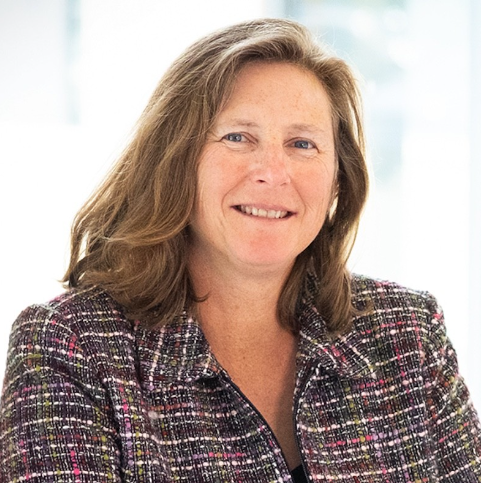
Dr. Linda Walker
Profile
From the time I emerged from college (the first time), prepared for a career in journalism, I felt driven to find ways to be part of the solution to the challenges I saw in the world.
Not quite satisfied with what I contributed as a writer, I pursued a master’s degree in human relations and counseling through University of Oklahoma and began my career as a helping professional in the mid 1990s. I later added post graduate certificates in addiction studies and school counseling, and a doctorate in psychology with an emphasis in psychophysiology from Saybrook University.
In my early work, I helped adults who had developmental disabilities find ways to live independently and experience life to their fullest. Since then, I’ve had the privilege to work with people from diverse backgrounds and circumstances seeking to find their balance, wellbeing and optimal function. Along the journey, I’ve spent time working in community mental health, juvenile justice, private practice and corporate health.
I added neurofeedback and biofeedback to my practice in my work within a residential treatment facility for juvenile delinquents in 2000. Assessment using qEEG came a short time thereafter.
As a counselor, I was seeing young adults who had one last chance at remediation. They had trauma, mental health and behavioral conditions, learning disorders, substance use problems, post concussive incidents and toxic chemical exposures — and usually all rolled up into a single young person! They had tried practically every medication and therapy in the book.
I began to question what more I could offer these young men and women to help them toward a better future.
That answer came in the form of neurofeedback and biofeedback. With a structured curriculum integrated into the residential treatment program, the number of restraint interventions decreased, medication need decreased and kids began reporting they made honor role in school — the first time for most of them. The program was documenting these changes and tracking data. Sadly the economic downturn spelled an end to the program in 2010.
Having witnessed the power of psychophysiological therapies to effect change in those I helped, I moved forward professionally within my own private practice. The past decade has indeed been busy!
I continued seeing children with challenges. In addition, I began to see adults and children with chronic disorders, such as pain and epilepsy. With an institute for performing arts nearby, I also began to expand my knowledge in working with optimal performers.
I have been privileged to direct assessment for a neurotherapy group that had clinics throughout Michigan, develop and teach biofeedback for Western Michigan University, and work with Bio-Medical, Thought Technology, and Biofeedback Federation to teach courses, mentor and develop software. I’ve had the opportunity to advise best practice in the field of psychophysiology and to participate in research efforts.
These accomplishments have been very gratifying and it’s a privilege to make a contribution to the advancement of helping therapies. That said, my heart still lives in the opportunity to work with others, to meet them where they are in their journey and to use the tools and skills I have to help them along their way. That goes for those whom I mentor and teach, as well as those who come to me as clients.
My next courses
Experience with neurofeedback
Not only does our intstructor have 20+ years of experience in Neurofeedback, she is also passionate about getting you accomplished in your Neurofeedback Learning Journey.
"The idea behind Alpha-Theta-Training is to create an access between the conscious and the unconscious level." About the use of Alpha-Theta-Training in therapy and as a method of self-care - an interview with Meike Wiedemann
Together with neurobiologist and neurofeedback expert Meike Wiedemann, we conducted an interview on the topic of alpha-theta training. She explains what Alpha-Theta-Training actually is, how she uses it in her everyday practice and why it is a method of self-care.
BEE Medic: Dear Meike, thank you very much for taking time for us today. Can you start by describing what Alpha-Theta-Training actually is?
Meike: Alpha-Theta-Training is a component of the so-called Othmer Method. With Alpha-Theta, we basically resort to frequency band training. In contrast to awake training, we also speak of deep state training with alpha-theta training, because the state you want to achieve with it is a kind of trance state. In Alpha-Theta-Training, patients sit on a comfortable chair with their eyes closed. Patients should keep their eyes closed throughout the process in order to have better access to processing psychological issues in these deep state areas. ILF awake training is mainly used for physiological regulation. Alpha-Theta-Training goes one layer deeper to address psychodynamic processes and also access unconscious processing. The idea behind Alpha-Theta-Training is to create an access between the conscious and the unconscious level. Alpha-Theta-Training therefore aims more at psychodynamics and less at physical regulation. Whereby it must be said that inner-psychic processes that shape our behavior are also closely connected to physical sensations and vice versa. In Alpha-Theta-Training one opens the pipeline so that the conscious and unconscious systems can be "connected" and thus the resources in the unconscious can also be used.
BEE Medic: What does alpha actually stand for and what does theta stand for?
Meike: These are the classic frequency bands. Alpha is a frequency band around ten hertz and theta is lower, between four and seven hertz. The state in alpha is a slight relaxation, you can speak of a relaxed focus. In comparison, theta is even lower. When we talk about the whole spectrum of waking states, there is this relaxed focus and then when you "go inward" more and more and withdraw into yourself, then we are more in the theta range and the subconscious states.
BEE Medic: How do you use the Alpha-Theta-Training in your practice?
Meike: The Alpha-Theta-Training is always an addition to the ILF-Training, to the so-called awake training. With ILF Neurofeedback, a basis is first created over several sessions, there is no fixed number. That is, you first have many sessions of awake training to reduce symptoms and stabilize the person to be treated. Then you can work with it for topics that involve psychodynamic processes. For example, changing beliefs, letting go of old habits, or even in processing traumatic content. The next step is to dive one layer deeper to resolve things as well. In the further course of an alpha-theta session, neurofeedback promotes both alpha and theta waves. In the beginning, patients feel a slight relaxation in the alpha range. After five to ten minutes, the patients usually go one step deeper into these trance-like states. As a rule, they then switch between alpha and theta, or sometimes have longer states in theta. This is the area in which one has access to the unconscious areas. The application of Alpha-Theta-Training differs between patients. For some it is advisable to do Alpha-Theta-Training every second session, for others it may be necessary to work with it every three, four, five sessions first, in order to maintain the symptom reduction achieved in the waking training and not to cause any regression. But what the patients experience in Alpha-Theta-Training are dream-like states. Things come together and they find solutions that they would never have thought of with conscious thought. However, it is not always consciously that things "click". It often happens on an unconscious level.
BEE Medic: Why is it so important to prepare for Alpha-Theta-Training with ILF Neurofeedback?
Meike: You want patients to experience Alpha-Theta-Training from a safe position, and that needs preparation and physiological regulation through ILF-HD training first. Patients who are very loaded, whether it's emotional problems or neurological instabilities, something like migraine attacks or headache symptoms, can be re-triggered by alpha-theta training. Or if I do Alpha-Theta-Training without ILF Training with people who have had traumatic experiences, they may find themselves with their whole experience in that trauma. If someone is still extremely anxious and controlled, then he or she will not be able to engage in Alpha-Theta-Training either. What might happen then is that the patient:inside opens their eyes and says "I'm not doing that!" because they feel that they are losing control. The letting go and the relaxed state is then perceived as dangerous and too overwhelming, thus unnecessary fears can be triggered.
Therefore, a good preparation is needed, on the one hand with the ILF training and on the other hand, of course, a correspondingly good relationship with the therapist.
BEE Medic: With which patients do you do the Alpha-Theta-Training?
Meike: Alpha-Theta-Training can really consolidate the effects of ILF-HD-Training. For patients who are "not yet ready" after ILF training, Alpha-Theta-Training can give another boost to their further development. The person should only tolerate it well or be sufficiently prepared by ILF training or other self-regulation methods. I have had patients in training where I have said "Great, the headaches are gone, now we can phase out the training". And the patients have then said: "No, now we are really starting. I never thought I would get this far in my life and now I have this and that wish." Alpha-Theta-Training is also often used in peak performance. For example, an skier may go through certain stretches or an actor/ actress or singer may prepare for performance or exam in this state.
BEE Medic: What advantage does the Alpha-Theta-Training offer to your patients?
Meike: The Alpha-Theta-Training can give a further push in the change work, in the whole therapy process and allows a processing on a deeper level. When I train the Alpha-Theta, then I also train for the future: How can I get involved in such states? One can then create much more access to resources that lie in the subconscious and use more of them.
BEE Medic: Why do you do Alpha-Theta-Training with your eyes closed? And how does the feedback actually work?
Meike: In Alpha-Theta-Training it is important to close your eyes so that you can get into this deep state at all. In this state, Alpha-Theta-Training makes it possible to experience things again in a kind of dissociation. That is, it allows you to feel yourself in a safe state to be able to process things again from a different perspective. It's like an "inward look." You turn your focus away from the outside world and into the inside world. And that is of course difficult when you are distracted by images from the outside. Only with closed eyes do the alpha waves emerge to the extent that you can look inside yourself. The tricky thing about neurofeedback is that all the feedback you need, i.e. how the alpha amplitudes, theta amplitudes, steep rises in amplitudes are behaving, is all fed back auditorily. You don't have to worry about missing any feedback with your eyes closed. Nevertheless, we have the possibility to give visual feedback at the beginning of the software module Alpha-Theta-Reflections. This often makes it easier for the patient to get started. These are so-called guided imagery, which can be switched on in different languages, so that the patients are supported in reaching such a state.
BEE Medic: What are your previous experiences with Alpha-Theta-Training?
Meike: I have also worked with alpha-theta training in earlier times at the university. The experience is that patients get into such trance states relatively quickly without needing much guidance. In a therapeutic sense it is a fantastic opportunity for patients to support psychodynamic processes on an unconscious level, to process, to re-learn and to really use this deep state, just like you do with other methods. I also work with hypnotherapy. There are relatively many parallels to that.
BEE Medic: As a therapist, can you also use Alpha-Theta-Training on yourself?
Meike: I would recommend it to every therapist to train him/herself and to use these tools. And not only in the sense that one makes a self-awareness, but so that one knows what the patients experience during the process. For myself, the most profitable ones are Synchrony and Alpha-Theta-Training. There are different methods for self-care, but when I do neurofeedback, Synchrony and Alpha-Theta are my favorites. It really brings you down from the day-to-day, to another level, like a nice deep meditation. And it's super simple. You don't have to do anything except stick on the electrodes, start the program, and then let yourself be sprinkled, so to speak. I can then really dive into this deep state. I find that very beneficial and the rest of the day is completely different, much more relaxed and calm. From that point of view, if you have a Neurofeedback system available, I find Alpha-Theta-Training a relatively simple way of self-care.
That was ACAN 2023
A long time was planned, organized and waited - now the Annual Conference for Applied Neurofeedback is already over. This year it took place for the first time from June 16th to 17th. International practitioners, experts and interested people met in Birmingham, UK, to inform themselves about the latest scientific findings in the field of neurofeedback.
The event covered a wide range of topics related to neurofeedback. Renowned experts such as Sebern Fisher and Siegfried Othmer shared their insights, experiences and the latest research findings. A mixture of lectures, case studies, discussions and practical workshops offered all participants two varied and educational days.
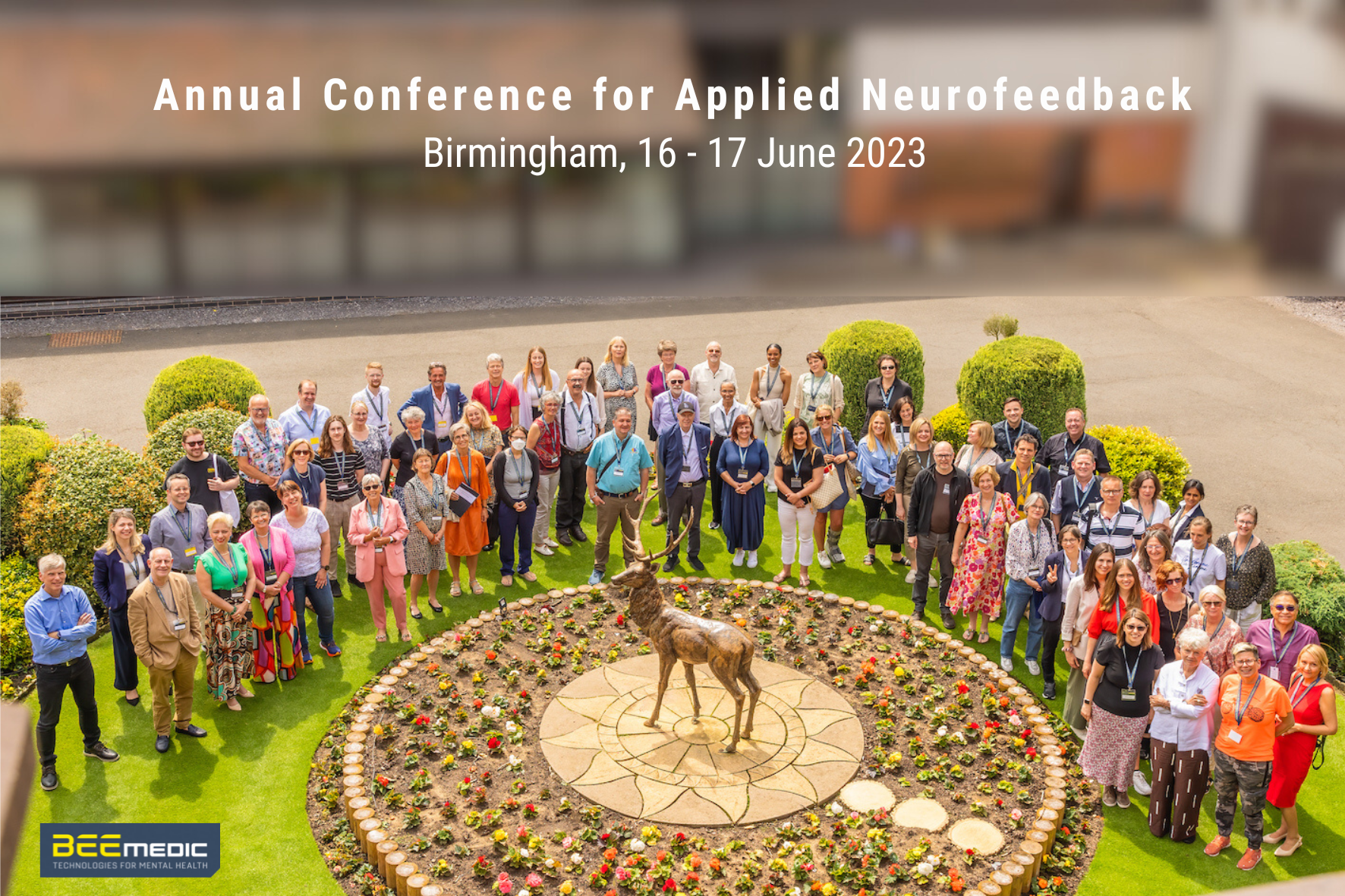
"We want to create a space for exchange, a platform where people can come together and share ideas," is how Melanie Klemann, a member of the organizing team, described one of the goals of the conference in advance. Looking back, it can be said: the expectations were exceeded. The restriction of social interaction in recent years and the associated desire of the participants for exchange was clearly noticeable. In addition to the presentations, the opportunities provided were used to exchange ideas and network with other participants.
Overall, the conference served as a platform for knowledge dissemination, innovation and collaboration in the field of Neurofeedback. However, in addition to the scientific aspect, it was also the sense of community and sharing that made this first Annual Conference for Applied Neurofeedbac so successful.
Stay tuned for next year!