Neurofeedback Grundkurs

Course description

Der Neurofeedback Grundkurs ist der ideale Einstieg ins Neurofeedback. In 5 Tagen lernen Sie alles, was Sie für den Start benötigen – vom Anlegen der Elektroden, über das Bedienen der Hard- und Software bis hin zur Auswahl der richtigen Behandlungsprotokolle, der Erstellung von Symptomprofilen und der Bewertung von Behandlungsergebnissen.

Einen zentralen Teil nimmt das tägliche Neurofeedback-Praktikum ein, bei dem Sie abwechselnd als „Therapeut“ und „Patient“ Neurofeedback selbst erfahren. Das Vorgehen und die Interpretation der Trainingsergebnisse werden für jeden einzelnen Teilnehmer in Kleingruppen unter Leitung erfahrener Dozenten diskutiert. So sind Sie nach Abschluss des Kurses in der Lage, sehr effizientes Neurofeedback direkt in der klinischen Praxis anzuwenden.

Das vollständige Neurofeedback Equipment stellen wir Ihnen während des Kurses zur Verfügung. Am Ende des Kurses findet ein Abschlusstest statt und Sie erhalten ein Zertifikat.


Essential teaching content

  • Technische Grundlagen des EEG und der Signalverarbeitung
  • 10-20 System und Elektrodenplatzierungen
  • Selbstregulierungsmodell und Neuroplastizität
  • Neurophysiologische Grundlagen zum Verständnis von Neurofeedback-Effekten
  • Umgang mit Neurofeedback-Hardware und Software sowie Artefakte erkennen
  • Muster von Fehlregulierungen im Zusammenhang mit physischen, emotionalen und Verhaltensproblemen erkennen
  • Neurofeedback-Protokolle für klinische und Peak Performance Anwendungen
  • Symptombewertung und Beurteilung von Trainingsverläufen
  • Neurofeedback und Medikamente
  • Kontraindikationen
  • Verlaufskontrolle und CPT – Continuous Performance Test
  • Neurofeedback-Praktikum, zur Selbsterfahrung wie schnell und spezifisch Neurofeedback-Effekte sein können

After the course you can

  • Sicher mit 2-Kanal ILF-Neurofeedback arbeiten und Ihre Klienten nachhaltig mit Neurofeedback unterstützen
  • Behandlungsprotokolle gezielt nach Anlass und Klient auswählen und einsetzen
  • Klienten zu einer besseren Selbstregulierung verhelfen und Symptome von psychischen Erkrankungen lindern, wovon meist auch weitere therapeutische Interventionen profitieren
  • Selbst von der angenehmen Arbeit mit Neurofeedback profitieren, durch eine gewisse „Leichtigkeit“, die Neurofeedback in den therapeutischen Arbeitsalltag bringt 

Course highlights

  • Profitieren Sie vom hohen Praktikumsanteil und der Selbsterfahrung während des Kurses
  • Intensive Betreuung durch erfahrene Dozenten während des gesamten Kurses und in den Kleingruppen
  • Technischer Support während des gesamten Kurses live vor Ort

Location

Forchheim Digitalwerkstatt
Breitweidig 27
91301 Forchheim
Germany

Period of time

08.04.2024 – 12.04.2024
Local time: Europe/Berlin

Your selected time zone

Details

Montag, 08.04.2024 von 8:30 Uhr - 18:00 Uhr
Dienstag, 09.04.2024 von 8:30 Uhr - 18:00 Uhr
Mittwoch, 10.04.2024 von 8:30 Uhr - 18:00 Uhr
Donnerstag, 11.04.2024 von 8:30 Uhr - 18:00 Uhr
Freitag, 12.04.2024 von 8:30 Uhr - 16:00 Uhr

Price

1.490,00 EUR

Included in the price

  • Mittagessen, Verpflegung mit Kaffee, Tee, Wasser sowie Obst und / oder Gebäck in den Pausen
  • Bereitstellung des Neurofeedback-Equipments und von Verbrauchsmaterialien
  • Umfassender Kursordner mit allen Präsentationen und Arbeitsblättern
  • Abschlussprüfung mit Zertifikat bei bestandener Prüfung

More Information

Voraussetzungen für die Teilnahme 

  • Der Kurs richtet sich exklusiv an heilberufliche und therapeutische Fachanwender.


Bitte um Anmeldung bis 20.03.2024
Die Anmeldefrist ist schon vorbei? Kontaktieren Sie uns! Wir finden eine Lösung!

Bleiben Sie flexibel! Die Stornierung oder Umbuchung auf einen anderen Kurs ist bis zu 29 Tage vor Kursbeginn kostenlos möglich. 

Zur Buchung werden Sie direkt auf die Webseite des Veranstalters weitergeleitet.


Language

  • German

Organizer

BEE Medic GmbH
Max-Porzig-Str. 1
78224 Singen
Germany

  • courses@beemedic.de
  • Phone: +49 7731 96969-70
register* Print course description *By clicking on "register" you will be forwarded directly to the organizer of the course for booking. The organizer is also responsible for course organisation and invoicing.
 

What is neurofeedback? What is biofeedback? And how does a neurofeedback session actually work? - An overview of the most important terms in Neurofeedback

13. October 2023

Neurofeedback is becoming more and more well-known and many terms are becoming more common. But what do they actually mean? We would like to explain the most important of these terms in this blog post. 


What is Neurofeedback?
Neurofeedback is a computer-assisted therapy method for clinical use, in which selected parameters of one's own brain activity are made perceptible. For this purpose, brain waves are measured in real time on the surface of the head (neuro), which influence an audiovisual animation, often similar to a computer game (feedback). Neurofeedback is like a kind of mirror for the brain. Direct feedback based on proven treatment protocols and electrode positions aims to improve the brain's ability to self-regulate. In this way, symptoms of diseases can be alleviated.

What is Biofeedback?
In Biofeedback, peripheral physiological parameters are measured and fed back to the screen as feedback. The parameters can be, for example, respiration, heart rate variability or skin conductance. The feedback can be used to draw conclusions about the patient's current stress level. Biofeedback can be used in the therapy of mental and physical illnesses, as well as in performance and concentration training. Especially in symptom-based ILF - Neurofeedback, Biofeedback can be a good complement. Especially for patients who are not able to perceive or verbalize changes in their state of stress or relaxation well, Biofeedback is a way to better perceive and experience the changes. It can also be beneficial for therapists. For example, skeptical patients can be made aware of the connection between psyche and physiology. Therapists can also derive signs of stress and relaxation and optimize therapy accordingly.

How does self-regulation work in Neurofeedback?
In Neurofeedback, the brain's ability to self-regulate is trained. For this purpose, EEG signals are derived from the surface of the head. Based on a thorough survey of the symptoms of the person being treated, specific frequency ranges of brain activity are measured and evaluated to control feedback in real time in the form of an animation on a screen. The brain "recognizes" that it can influence the animation and, for example, the image becomes clearer and sharper or the music louder and softer. Through this continuous process, the treated persons can learn to improve their self-regulation ability. Especially in the case of mental illnesses, often associated stress symptoms, sleep disorders or disturbances of the attention and concentration spectrum can be significantly improved in this way. It is important to know that there is no optimal frequency that is the same for every person. Instead, the optimal frequency is very individual and depends on both the person and the given situation. Through self-regulation, the brain learns to find the optimal arousal frequency for itself in order to avoid over- and under-excitement, as well as associated symptoms.

Heart rate and heart rate variability in Biofeedback.
The pulse is a biological parameter that changes according to external and internal demands. Not only a steady pulse, but also the adaptability of the heart rate to different demands - the so-called heart rate variability (HRV) - is a central parameter in Biofeedback. 
Heart rate variability is the variation of the time interval between two heartbeats (also: beat to beat interval). This is longer in times of relaxation than in times of physical or emotional stress. A high heart rate variability speaks for a good (peripheral) self-regulation, because it indicates that the organism is able to adjust the heart rate depending on the requirements and finds the optimal frequency for the respective situation. Low heart rate variability is often related to a problem in dealing with stressful situations, memories or stress in general. Especially for patients with anxiety disorders, depression or chronic pain, Biofeedback with heart rate variability training can be helpful. Often these patients are not aware of the connection between their emotional stress and physical reactions and the perception of their own body does not work well because they have a permanently very high stress level. Training here to perceive, influence and synchronize central parameters such as heartbeat and breathing and thus lower the general stress level can be a key experience in therapy and make patients aware that they do have control over their physical and psychological state.

Breathing in Biofeedback
You probably know the tip that lay literature and grandmothers like to give whenever someone is stressed: take three deep breaths. Does that really help? Here's a little experiment: put your hand on your stomach. Breathe deeply into your belly, feel how the hand rises, how your belly bulges, when the belly is bulging to the maximum, hold your breath for a moment and then breathe out again slowly and evenly. Feel the air flowing first out of the belly and then out of the tops of the lungs, over both lungs and out the airway. Repeat this three times. What do you notice? How are you conducting yourself? How has your heartbeat changed? The Heartbeat?! Exactly - breathing and heartbeat are physiologically closely related. In a relaxed state, heart rate and breathing rate correlate, this is also called "respiratory sinus arrhythmia". When breathing in, the heart rate thereby becomes higher, the sympathetic nervous system is activated, and when breathing out, the heart rate becomes lower, the parasympathetic nervous system is activated. Breathing deeply in and out three times in stressful situations can thus help not only to gain better awareness and control over one's own breathing, but subsequently also to synchronize the correlation of breathing and heartbeat.

What is actually the skin conductance?
The skin on the palm of our hand is characterized by a particularly large number of sweat glands. In times of high stress, the glandular activity also increases rapidly. Since sweat is a salty liquid, the skin conductance increases as a result. This is measured by two electrodes on the fingers. In healthy people, skin conductance is constant and low at rest. If the skin conductance increases due to the presentation of a stressor, it usually returns to its initial level after 1 - 2 minutes. If the value remains at a high level for a long time, this indicates problems with emotional regulation. Fluctuations without any apparent reason can indicate that even stimuli that are actually neutral are perceived as stressful. Since skin conductance responds quickly to stressful stimuli and is easy to measure, it is particularly well suited as a psychophysiological mirror in therapy - and reflects the change between tension and relaxation. However, it can also be used as a support in relaxation training or in learning various relaxation techniques.

The body temperature in Biofeedback
Temperature is usually measured by a sensor on the finger. In a relaxed state, the smooth muscles in the walls of the blood vessels usually also relax, which causes more blood to flow into the extremities - we often recognize this by the feeling of warmth in the hands. Thus, an onset of relaxation is accompanied by an increase in temperature in the extremities. Under stress or tension, the muscles in the vascular walls contract, the vessels become narrower and less blood reaches the extremities, often resulting in a drop in body temperature. The body temperature usually reacts somewhat delayed, from the beginning of the stress reaction to a drop in body temperature in the extremities may well take 1-2 minutes. The body temperature skin conductance can be used in therapy, for example, to demonstrate the influence of thoughts and ideas on physiology, in fact some patients succeed in achieving a change in temperature by imagining warmth/cold, and body temperature can also play a role in relaxation training.

The combination of Biofeedback and Neurofeedback
In symptom-based infra low frequency (ILF) Neurofeedback, the patient's symptoms and state changes are the central components. Many of these symptoms also relate to correlates of stress and relaxation. Accordingly, the addition of Biofeedback parameters can be a useful complement to ILF Neurofeedback. This makes it possible for patient and therapist to include the physiological correlates of state changes in the therapy. Patients who are not able to perceive or verbalize changes in their stress and relaxation state very well will get another possibility to experience changes through Neurofeedback. Even changes that are partially below the threshold of perception can be made visible by measuring peripheral signals and can be incorporated into the therapy. For skeptical or tense patients, the inclusion of Biofeedback parameters in the sense of psychoeducation can also help to make the connection between psyche and physiology visible and tangible, to familiarize the patient with the setting with electrodes, and to gradually reduce the possible fear of changes through therapy in order to gently introduce the patient to Neurofeedback. The therapist can deduce signs of stress and relaxation in the physiological parameters and optimize the therapy accordingly, for example by changing the frequency.

What is Alpha-Theta Neurofeedback/ Synchrony Training?
Alpha-Theta Neurofeedback and Synchrony Training are two special types of neurofeedback. Alpha-Theta Neurofeedback is mainly about calming down cortical activity and being able to "shut down" better, both physically and psychologically. We like to call the synchrony training "mindfulness training" guided by one's own brain activity. Both methods ideally complement ILF neurofeedback and are used especially for post-traumatic stress disorders, anxiety and sleep disorders, but also in peak performance.
 

Aktionswoche der Seelischen Gesundheit bei BEE Medic

28. September 2023

Vom 10. bis 20. Oktober 2023 setzt sich die Aktionswoche der Seelischen Gesundheit unter dem Motto „Zusammen der Angst das Gewicht nehmen” mit dem Thema Ängste in Krisenzeiten auseinander. Das Aktionsbündnis Seelische Gesundheit verfolgt das Ziel,  auf die unterschiedlichen Strategien zur Bewältigung und auf das vielfältige psychosoziale Hilfsangebot in Deutschland aufmerksam zu machen sowie mentale Erkrankungen zu entstigmatisieren.


Steigender Bedarf an psychologischer Unterstützung


Studien zeigen, dass psychische Erkrankungen, darunter auch Angststörungen, und demzufolge der Bedarf an psychologischer Unterstützung immer mehr ansteigt. Verstärkt wird dies durch Krisen, wie beispielsweise die Corona-Pandemie. So zeigt eine Studie der DAK (1), dass im Jahr 2022 ein Höchststand an Fehltagen aufgrund psychischer Erkrankungen, wie Depressionen, Anpassungs- und Belastungsstörungen, chronische Erschöpfung oder Angststörung, zu verzeichnen ist. Eine weitere Studie der Krankenkasse (2) zeigt einen deutlichen Anstieg von  Angststörungen und Depressionen bei Jugendlichen während bzw. nach der Pandemie. Demzufolge sei die Prävalenz von Angststörungen bei Jugendlichen im Jahr 2021, im Vergleich zum Jahr 2019, um ca. 59% gestiegen. Weiterhin wurden 25% mehr Jugendliche verzeichnet, welcher mit depressiven Episoden versorgt wurden.


Generell brauchten während der Corona-Pandemie mehr Menschen psychologische Hilfe. So stellten beispielsweise 82% der Ärzt:innen bei ihren Patient:innen häufiger Probleme mit Angststörungen fest. Etwa 80% der Ärzt:innen diagnostizieren Depressionen häufiger als vor der Corona-Pandemie. Ebenfalls sind die psychosomatischen Beschwerden angestiegen, wie bspw. Müdigkeit, Erschöpfung oder Schmerzen ohne organische Ursache (3). Parallel zu dieser Entwicklung resultieren auf der Seite der Therapeut:innen lange Wartelisten sowie mentale Belastungen durch den vermehrten Stress für die Therapeut:innen.

seelische gesundheit

Woche der Seelischen Gesundheit bei BEE Medic


Dem Ziel,  auf die unterschiedlichen Strategien zur Bewältigung und auf das vielfältige psychosoziale Hilfsangebot in Deutschland aufmerksam zu machen, schließen wir uns daher gerne an und möchten Neurofeedback als Therapiebaustein für mentale Krankheiten  vorstellen.

Neurofeedback kann ein additiver Therapiebaustein sein, der sich für ein breites Patient:innen-Klientel und eine Vielzahl an Indikationen eignet. Durch die häufig schnellen Behandlungsdurchbrüche motiviert Neurofeedback dabei sowohl die Patient:innen als auch die Therapeut:innen und die Wartelisten können verringert werden. Gleichzeitig bringt Neurofeedback Leichtigkeit in den Therapiealltag und kann auch die psychische Gesundheit der Therapeut:innen selbst fördern.


In unserem Expertentalk mit Dr. rer. nat. Meike Wiedemann am 11. Oktober sprechen wir daher über Neurofeedback und Angststörungen. Dabei werden wir über die Entwicklung und die Rolle von Angst(störungen) in der Therapie sprechen und wie Neurofeedback dabei helfen kann. Unsere Expertin gibt dabei auch spannende Einblicke in Ihren Praxisalltag und Ihre langjährige Erfahrung mit Neurofeedback. 


Das Webinar eignet sich auch für Personen, welche keine Vorkenntnisse über Neurofeedback besitzen. Zu Beginn erhalten Sie eine kurze Einführung zur Funktionsweise und den Grundlagen von Neurofeedback. 


Hier gelangen Sie zu unserem kostenlosen Webinar am 11.10.2023.

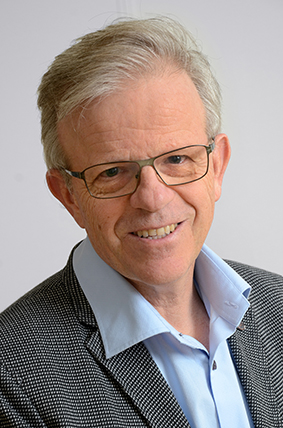
Andreas Müller

Dr. phil. Andreas Müller

Profile

Andreas Müller is an expert in the study of the human brain. For 17 years, he has been researching the connections between biology and mental disorders - for example, ADHD - as executive director of the Graubünden Brain and Trauma Foundation. In 2003, the former head of the Graubünden School Psychological Service initiated his first research project together with the world-renowned Russian neurophysiologist Yuri Kropotov: recording the brain waves of 250 healthy children and adolescents to create a database. Already in 2004, the database was expanded to include 540 adults. Together with people from Norway and Russia, the people from Graubünden formed the basis for an index database on the human brain. Since 2006, Andreas Müller has been the managing director of the Brain and Trauma Foundation in Graubünden. He has been working with neurofeedback since 1999.


Experience with neurofeedback

  • works with neurofeedback since 1999

Languages

  • German
  • English
  • Rromanian
  • Italian
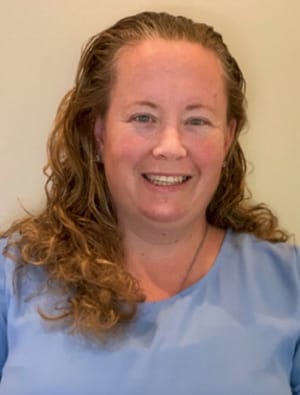
Amy Bernstiel

Amy Bernstiel

Profile

Amy has been a member of Sadar Psychological since May 2007. As the Care Coordinator, she manages patient care from start to finish. Amy is an expert advisor on insurance, office services and assists with all aspects of client . As a lead technician, Amy performs qEEG evaluations and interfaces with our partners to ensure data is analyzed properly.

Amy is committed to providing high quality care. She is a compassionate and empathetic member of the team who enjoys helping others achieve their goals.

  • Psychological Test Technician
  • EEG Biofeedback/ Neurofeedback Technician
  • qEEG/EEG Technician
  • IM Technician

5 Day In-Person Practicum Week

Course description

Includes Neurofeedback Assessment, Infra-low Frequency Neurofeedback with HD, Synchrony and Alpha-Theta Neurofeedback practicums into a 6-day format.

Essential teaching content


Location

EEG Info Training Facility
5950 Canoga Ave., Suite 430
91367 Woodland Hills
United States

Period of time

23.09.2024 – 27.09.2024
Local time: America/Los_Angeles

Your selected time zone

Price

$2,098

More Information

Prerequisites:

Language

  • English

Organizer

EEG Info Training Facility

5950 Canoga Ave., Suite 430

Woodland Hills, CA 91367

  • Phone: (818) 456-5975
register* Print course description *By clicking on "register" you will be forwarded directly to the organizer of the course for booking. The organizer is also responsible for course organisation and invoicing.
 

Distance Learning Practicum 2: Synchrony & Alpha-Theta Neurofeedback

Course description

In advanced practicum 2, we deepen our discussion and understanding of 2-channel Synchrony. Practice sessions with .05 Hz, 10 Hz alpha, and 40 Hz gamma feedback. Discuss outcomes and clinical applications for Synchrony.

Then the class shifts focus to alpha-theta where you will learn about the history of the method, using guided imagery, understanding history graphs, discussing session results, and how to work with different client groups. Credits 17.5 CEs

Essential teaching content


Online

Period of time

19.06.2024 – 21.06.2024
Local time: UTC

Your selected time zone

Price

$1,049

More Information

Prerequisites:

Language

  • English

Organizer

EEG Info Training Facility

5950 Canoga Ave., Suite 430

Woodland Hills, CA 91367

  • Phone: (818) 456-5975
register* Print course description *By clicking on "register" you will be forwarded directly to the organizer of the course for booking. The organizer is also responsible for course organisation and invoicing.

Distance Learning Practicum 2: Synchrony & Alpha-Theta Neurofeedback Online

Course description

In advanced practicum 2, we deepen our discussion and understanding of 2-channel Synchrony. Practice sessions with .05 Hz, 10 Hz alpha, and 40 Hz gamma feedback. Discuss outcomes and clinical applications for Synchrony.

Then the class shifts focus to alpha-theta where you will learn about the history of the method, using guided imagery, understanding history graphs, discussing session results, and how to work with different client groups. Credits 17.5 CEs

Essential teaching content


Online

Period of time

04.12.2024 – 06.12.2024
Local time: America/Los_Angeles

Your selected time zone

Price

$1,049

More Information

Prerequisites:

Language

  • English

Organizer

EEG Info Training Facility

5950 Canoga Ave., Suite 430

Woodland Hills, CA 91367

  • Phone: (818) 456-5975
register* Print course description *By clicking on "register" you will be forwarded directly to the organizer of the course for booking. The organizer is also responsible for course organisation and invoicing.
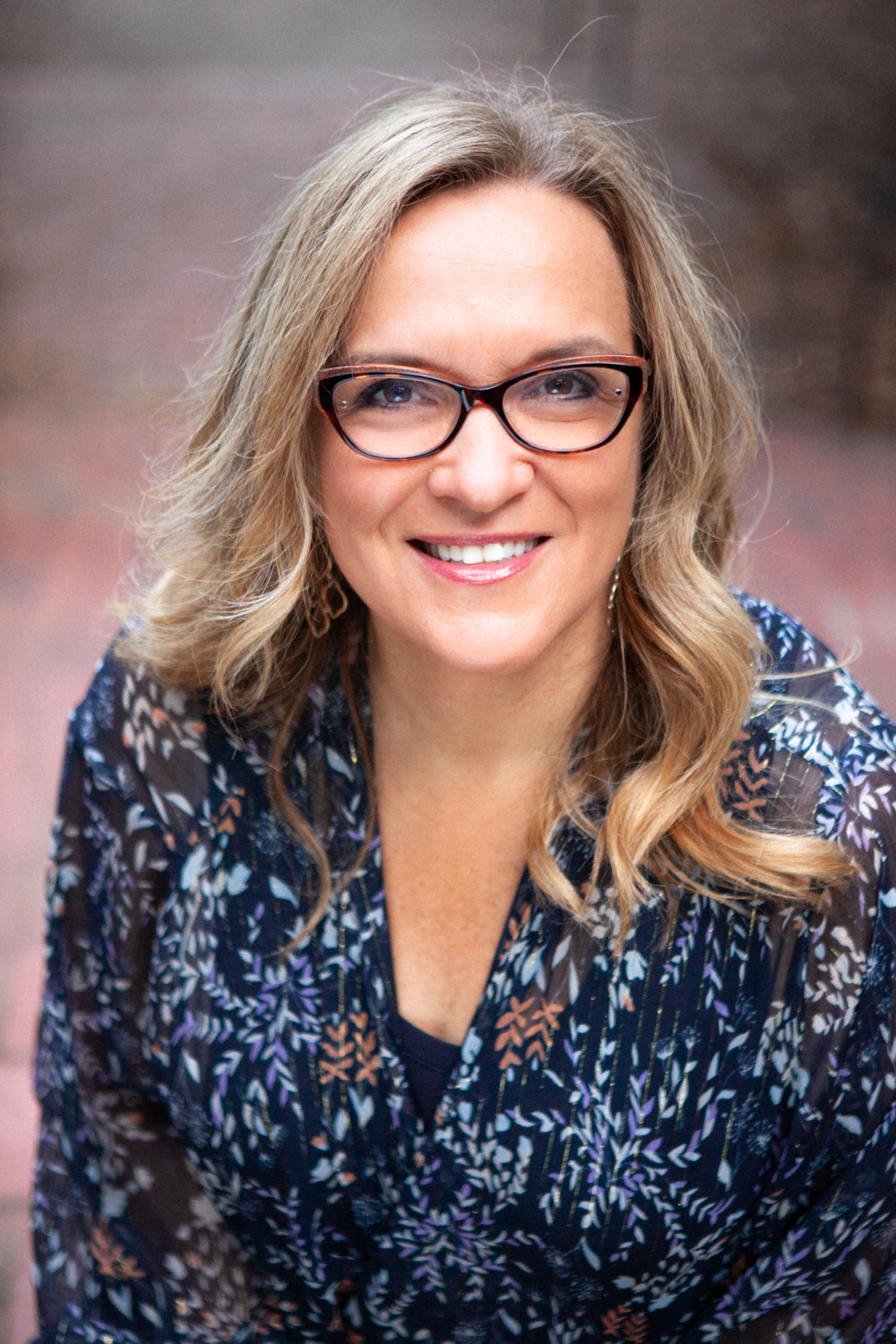
Darla Meulemans

Darla Meulemans

Profile

Darla Meulemans received an undergraduate degree in Psychology & Biology from the University of Vermont and a MA in Counseling Psychology from Goddard College, where she met the requirements for licensure as a Psychologist in the state of Vermont. She relocated to Portland, Oregon and managed programs in community mental health and youth addiction treatment while also launching a private psychology and wellness practice, Mind Potential Northwest. Darla's work focuses on fostering resilience in individuals and workplaces. She provides Personal and Professional Development Coaching, Neurofeedback Mentoring and runs an online program integrating neuroscience based strategies with mental health skill building and holistic healing. Darla is a Certified Qualified Mental Health Professional and an Othmer Method Neurofeedback Practitioner. She holds additional certifications in Addiction Behavioral Medicine and Holistic Nutrition. She began working with the EEG Institute in 2018 when she was sponsored by the Brain Othmer Foundation to travel to India to conduct a customized Intro to Neurofeedback Course for teachers and counselors at the Tibetan Children's Villages.

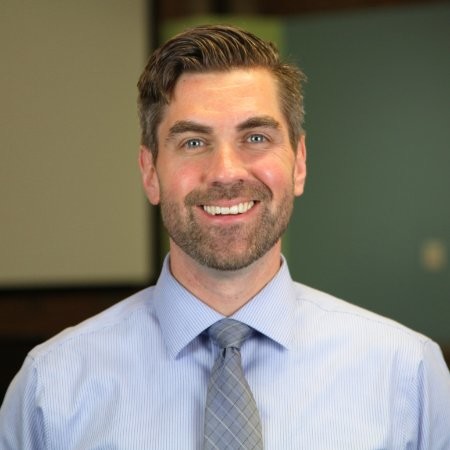
Kurt Othmer

Kurt Othmer

Profile

Kurt received his Bachelor of Arts in Psychology in 1998 with a minor in music and his Bachelor of Arts in Economics in 1999 from the Davidson Honors College at The University of Montana. At the age of 9 Kurt Othmer found himself part of the neurofeedback community due to the needs of his brother Brian. Kurt's parents Sue and Siegfried Othmer became the leading educators and innovators in the neurofeedback field.

Kurt founded EEG Info in 2002 as a new home for his family's training courses and clinical work. He also formed a non-profit in 2003 after his late brother The Brian Othmer Foundation, with its primary project Home Coming 4 Veterans, a non-profit outreach program providing free services to veterans through over 200 volunteer clinicians worldwide.

Kurt Othmer along with his family continue to educate professionals and pioneer the clinical developments in the field.

Subscribe to